

The Facts
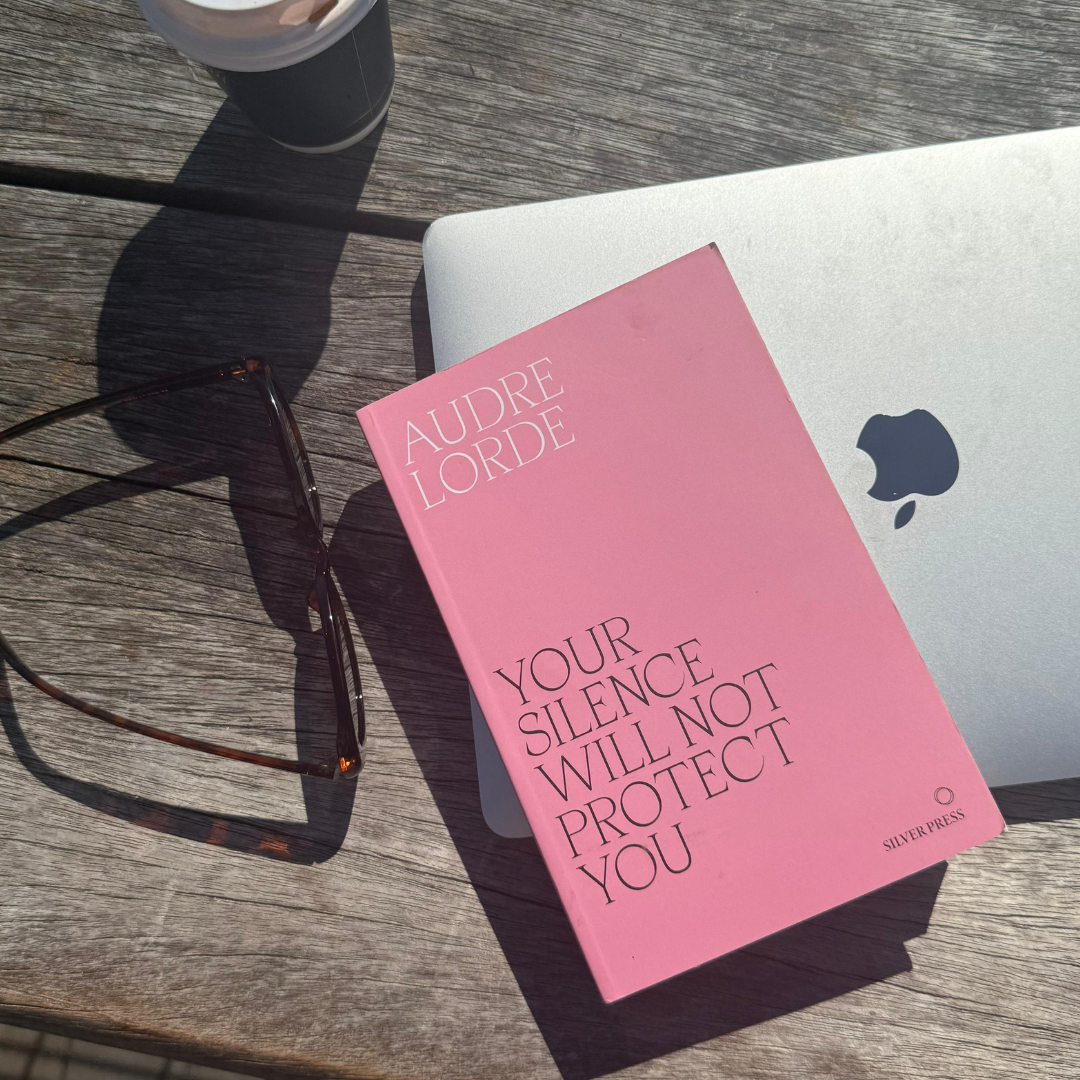
- Published: 2017
- Original language: English
- Genre: Essay collection, poetry, autobiography
- Number of pages: 227
The Gist
Your Silence Will Not Protect You is a collection of Audre Lorde’s most influential essays, speeches, and poems that explore how identity, power, and resistance shape the lives of marginalized people—especially Black women. The book centers on Lorde’s core argument that silence in the face of injustice is dangerous, both personally and politically, because it allows oppression to continue unchallenged.
Throughout the collection, Lorde insists that speaking up—whether through poetry, activism, or personal truth-telling—is a transformative act. She argues that anger, difference, and vulnerability are not weaknesses but sources of power that can fuel change. The pieces address racism, sexism, homophobia, colonialism, and the limits of white feminism, urging readers to examine how systems of oppression intersect in everyday life.
The book also explores selfhood and care: Lorde frames self-care as a political act, necessary for survival in a world that often seeks to silence or erase marginalized voices. Her writing blends the personal and the political, using her own experiences as a Black lesbian woman, poet, and cancer survivor to illuminate broader social truths.
In essence, the collection is a call to courage. It asks readers to confront the ways they have been silenced, to recognize the cost of that silence, and to speak—with clarity, anger, compassion, and intention—because “your silence will not protect you.”
Key Quotes and Their Meaning:
1. “Your silence will not protect you.”
Meaning:
Lorde argues that staying quiet to avoid conflict, punishment, or discomfort does not shield marginalized people from harm. Silence only maintains oppressive systems. Speaking out may be risky, but silence guarantees invisibility and ongoing injustice.
2. “The master’s tools will never dismantle the master’s house.”
Meaning:
You cannot defeat oppression by using the same logic, structures, or values that created it (e.g., white supremacy, patriarchy). True liberation requires new ways of thinking, living, and organizing.
3. “Caring for myself is not self-indulgence, it is self-preservation, and that is an act of political warfare.”
Meaning:
Self-care is necessary for people who face racism, sexism, and homophobia. It becomes a radical act because the world is structured to drain their energy, bodies, and willpower. Caring for yourself becomes a strategy of survival and resistance.
4. “I am deliberate and afraid of nothing.”
Meaning:
A declaration of agency and fearlessness. Lorde emphasizes intentional living—refusing to let fear guide decisions, especially regarding identity and truth.
5. “Poetry is not a luxury.”
Meaning:
For Lorde, poetry is a tool for survival and imagination. It gives voice to truths that are necessary for social change. Art is not decoration; it is a foundational form of knowledge for marginalized communities.
6. “Anger is loaded with information and energy.”
Meaning:
Anger is not destructive by default. It can be clarifying and productive, especially when confronting racism and injustice. Lorde reframes anger as a powerful catalyst rather than a shameful emotion.
Why The Book is Named “Your Silence Will Not Protect You”
The title captures Lorde’s central thesis:
- Silence is often a survival strategy—people fear backlash, rejection, or violence.
- But Lorde argues that silence is an illusion of safety.
- Marginalized people still face discrimination, erasure, and danger even when silent.
- Speaking is how we reclaim power, articulate identity, build community, and dismantle oppressive structures.
The title is both a warning and a call to action: Silence won’t save you; voice and truth-telling might. The title comes directly off of the first essay “The Transformation of Silence Into Language and Action” which is honestly my favorite essay and have read it multiple times. It's good, and I believe she first gave this as a speech in 1977 at the Modern Language Association conference in Chicago. Imagine having heard this live?

Main Themes
1. Silence vs Voice
- How silence harms the oppressed
- Speech as a tool for survival and liberation
- The personal and political costs of staying quiet
2. Intersectionality (before the word existed)
- Black womanhood
- Queerness
- Racism within feminism, sexism within racial justice movements
- How identities overlap to shape oppression
3. Anger as a Tool
- Anger clarifies injustice
- Productive anger vs destructive anger
- Women of color’s anger as necessary and generative
4. Self-Care as Resistance
- Caring for your body, mind, and energy in a society that exploits them
- Survival as political warfare
5. The Power of Poetry + Imagination
- Poetry creates space for imagining liberated futures
- Art as a necessity, not a luxury
6. Difference as Strength
- Differences (race, class, sexuality) shouldn’t divide us
- They can create stronger coalitions
- Oppression thrives when differences are feared
7. Critique of White Feminism
- Challenges white feminists to address racism
- Critiques exclusivity and “colorblind” approaches
- Stresses that liberation must include all women, not just privileged ones
8. The Body and Illness
- From The Cancer Journals included in the collection
- Illness as both personal and political
- The politics of the medical system and the body
Who was Audre Lorde?
Audre Lorde (1934–1992) was a poet, essayist, librarian, activist, and self-described “Black, lesbian, mother, warrior, poet.” Her work is foundational to Black feminist thought, queer theory, intersectionality, and contemporary social justice movements. She became best known for her poetry and speeches, which explored subjects such as black identity, womanhood, queerness, rage, resistance, sisterhood, the politics of silence. She called out other women for not supporting each other, and flagged the vulnerabilities in most of the activism groups/protests happening at the time. Lorde taught at several institutions, co-founded important feminist and literary organizations, and advocated for global solidarity among women—particularly women of color.
Movements She Inspired or Participated In:
1. Black Feminism
- Core influence on organizations like the Combahee River Collective (though not a member).
- Her writings helped define Black feminist theory.
2. Lesbian and Queer Activism
- One of the earliest and most influential Black lesbian voices in literature and activism.
3. Intersectional Feminism
- Her work laid the intellectual groundwork for what Kimberlé Crenshaw later termed intersectionality.
4. Anti-racist and Anti-colonial Movements
- Advocated for women of color globally, particularly in the Caribbean, Africa, and the U.S.
- Co-founded Kitchen Table: Women of Color Press with Barbara Smith.
5. Health Justice & Body Politics
- The Cancer Journals made illness, bodily autonomy, and medical racism central feminist issues.
Notable Works
Poetry
- Coal (1976) – poem collection about Blackness, sexuality, and identity.
- The Black Unicorn (1978) – considered her poetic masterpiece, drawing heavily on African mythologies.
- From a Land Where Other People Live (1973) – nominated for a National Book Award.
Essays / Prose
- Sister Outsider (1984) – essential feminist text. Includes “The Master’s Tools Will Never Dismantle the Master’s House” and “Uses of Anger.”
- Your Silence Will Not Protect You (posthumous collection) – selected essays and poems often studied today.
- The Cancer Journals (1980) – groundbreaking work on illness, the body, and resistance, blending memoir and political theory.
- Zami: A New Spelling of My Name (1982) – a biomythography (mix of memoir + myth + fiction); foundational queer literature.
Comparison: Your Silence Will Not Protect You vs Sister Outsider - Which one should you read first?
Similarities
- Both include Lorde’s most important essays and speeches.
- Both explore race, gender, sexuality, anger, silence, and power.
- Both reflect Lorde’s personal and political philosophy.
- Both are foundational texts in Black feminism and queer theory.
Differences
1. Structure
- Sister Outsider (1984) is a curated collection originally compiled for publication by Lorde.
- Your Silence Will Not Protect You (2017) is a posthumous collection that gathers key essays plus poetry in one volume.
2. Tone & Purpose
- Sister Outsider is more academic, polished, and intentionally shaped into a cohesive feminist argument.
- Your Silence Will Not Protect You feels more like a survey of her greatest hits, giving a broader view of her ideas and creativity (especially with poetry included).
3. Contents
- Sister Outsider contains landmark essays like:
- “The Uses of Anger”
- “The Erotics of Power”
- “The Master’s Tools…”
- Your Silence Will Not Protect You includes many of those, but supplements them with:
- Additional poems
- Excerpts from The Cancer Journals
- Pieces not included in Sister Outsider
4. Where to start?
- Start with Your Silence Will Not Protect You if you want:
- A broad introduction to Lorde’s voice
- A mix of poetry and essays
- A more emotionally varied representation of her thinking
- Start with Sister Outsider if you want:
- A tighter, more theoretical foundation
- Classic essays discussed in academic and feminist studies
- A more formal exploration of her intellectual legacy
Similar Authors:
- Adrienne Rich
- Bell hooks
- Toni Morrison
- Alice Walker
- Gloria Anzaldua
- Angela Davis
Books with Similar Energy to Your Silence Will Not Protect You
- Women, Race, & Class – Angela Davis
- Borderlands/La Frontera – Gloria Anzaldúa
- Sister Outsider – Audre Lorde (if you haven’t read the full original)
- A Burst of Light – Audre Lorde
- Eloquent Rage – Brittney Cooper
- Thick – Tressie McMillan Cottom
- How We Get Free – Keeanga-Yamahtta Taylor (on the Combahee River Collective)
- Notes of a Native Son – James Baldwin (Lorde considered him a major influence)
- The Source of Self-Regard – Toni Morrison (essays on power, identity, ethics)
So, think you'll read it?